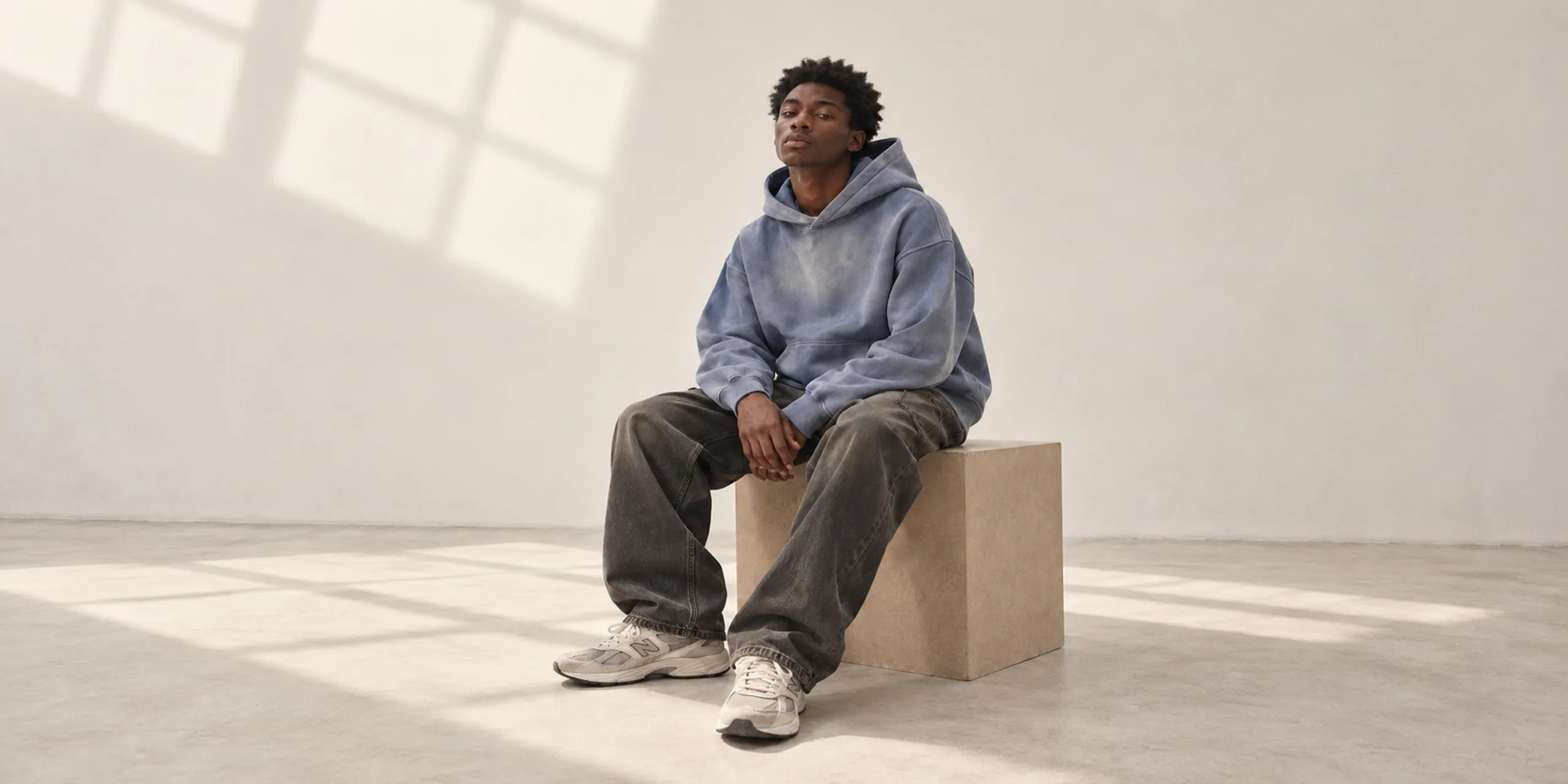
Starting a streetwear brand does not require beginning with thousands of units. A more controlled approach is to develop the product carefully, test demand with a lower MOQ and scale production around the pieces that actually perform.
For independent fashion brands, one of the biggest early decisions is how to turn an idea into a real garment without committing too much inventory too soon. This guide explains how low-MOQ streetwear manufacturing works, what to prepare before contacting a manufacturer and how OEM / ODM production can support a brand from first sample to repeat orders.
1. Why low MOQ matters for a new streetwear brand
MOQ means minimum order quantity. In clothing manufacturing, it refers to the minimum number of garments a supplier is willing to produce for a particular order.
Traditional large-volume production can create a difficult situation for a young brand. You may have confidence in the design, but you still do not know exactly which color, fit or graphic will perform best after the product reaches the market.
Working with a low MOQ streetwear manufacturer gives the brand more room to test. Instead of putting most of the budget into inventory, more capital can remain available for content, marketing, product development and future restocks.
Introduce a product with a more controlled quantity before committing to a larger run.
Avoid tying too much working capital to untested colors, sizes or designs.
Use real customer response to decide which products deserve repeat production.
At COUPE COUPE, custom OEM / ODM projects can begin from approximately 100 件, depending on the garment, fabric and customization requirements.
2. Choosing the right streetwear manufacturer
A clothing supplier is not automatically the right partner for a streetwear brand. Streetwear often depends heavily on fit, 织物重量, washes, oversized proportions, graphics, embroidery and small construction details.
When evaluating a 定制街头服饰制造商, look beyond the quoted unit price. The more useful question is whether the manufacturer can help you make better product decisions before bulk production begins.
A useful manufacturing partner should understand:
- Oversized and streetwear-focused garment proportions.
- Fabric weight, 手感, shrinkage and intended use.
- 印刷, embroidery and other logo decoration methods.
- 定制标签, 吊牌和包装.
- 采样, fit correction and production feasibility.
- How MOQ, materials and customization affect cost.
For a growing brand, the more valuable relationship is often one that connects design decisions, 采样, production and repeat orders.
3. Develop the product before building volume
One of the most expensive mistakes a new clothing brand can make is rushing into bulk production before the product has been properly reviewed.
Product development can begin from many different starting points. A brand may already have a complete tech pack, or it may only have sketches, reference images or an existing garment that communicates the intended direction.
Before production, the development process may include fabric selection, 测量, pattern adjustments, 修剪, stitching, logo placement, 标签和包装.
The purpose of sampling is not simply to create one piece. It gives both the brand and manufacturer an opportunity to review the garment before larger quantities are committed.
You can learn more about this process on our 代加工 / ODM 街头服饰制造商 page.
4. OEM vs ODM streetwear manufacturing
The terms OEM and ODM are often used together, but they describe slightly different ways of working with a clothing manufacturer.
OEM clothing manufacturing
OEM is commonly used when the brand already has a clear design, specification or tech pack and needs a manufacturer to turn that specification into a finished product.
ODM clothing manufacturing
ODM can involve more development support. A brand may bring an early concept, references or desired product direction and work with the manufacturer to turn that direction into a production-ready garment.
Many independent brands use a workflow somewhere between these two models. They already know what they want the product to feel like, but still need support with materials, construction or production details.
That is why choosing an 代加工 / ODM streetwear manufacturer should be based on the amount of development support your brand actually needs.
5. 织物, logos, labels and customization
Streetwear identity is often built through small product details. Two hoodies may use a similar silhouette, but differences in fabric, wash, ribbing, print texture, embroidery and branding can create completely different results.
Common streetwear customization options include:
- Screen printing and other print techniques.
- Standard and dimensional embroidery.
- Puff and special-effect logo applications.
- Woven labels and care labels.
- Custom hangtags.
- Custom packaging.
- Fabric and color selection.
- Custom cut-and-sew construction.
If your priority is branding and garment decoration, see our 标志定制 page.
Brands that already have blanks or want to begin with ready-stock garments can also explore 空白批发 .
6. Moving from sample to bulk production
Once the sample is confirmed, the project can move into production planning. This stage should be based on an agreed garment specification rather than assumptions.
The final production setup may include confirmed measurements, 织物, colors, 装饰, 标签, quantities and packaging requirements.
A controlled first order is particularly useful for a new streetwear brand because it creates real information: which sizes sell, which colors customers prefer and how quickly inventory moves.
The goal is to learn with less inventory risk and increase production when the product proves itself.
7. Build a production system that can grow with the brand
Starting small and remaining small are two different things. A useful manufacturing relationship should make it possible to move from development to first production, then from first production to repeat orders.
After a successful release, brands usually learn more about the product than they knew before launch. Customer feedback may reveal that one color should be restocked, another should be removed, or a fit detail should change in the next version.
This is where a long-term manufacturing partner becomes more valuable. Instead of starting from zero every time, product knowledge can carry into future production.
For early-stage brands that want a more controlled path, visit our 对于初创公司 page.
Start with a better product, then scale around demand
Building a streetwear brand is not simply a question of finding the cheapest garment factory. Product quality, inventory risk, development speed and the ability to repeat successful products all matter.
A low-MOQ approach gives independent brands more room to learn. Combined with structured sampling and a connected OEM / ODM manufacturing process, it can help turn early ideas into products that are easier to test, improve and eventually scale.
COUPE COUPE works with independent streetwear brands across product development, 采样, custom clothing manufacturing, branding and repeat production.
Have a streetwear product in mind? 从想法开始. Build the volume around what works.
Send us your product type, reference images and expected quantity. Our team can review the project and help identify the next development or manufacturing step.
Low MOQ streetwear manufacturing FAQ
What is a good MOQ for a new streetwear brand?
The appropriate MOQ depends on the garment, fabric and customization requirements. COUPE COUPE custom OEM / ODM projects can start from approximately 100 pieces for suitable projects.
Can I manufacture clothing without a complete tech pack?
是的. Development can begin from sketches, reference images, existing garments or a clear product concept. The amount of development work required will depend on how complete your starting information is.
What is the difference between blank wholesale and OEM production?
Blank wholesale uses existing ready-stock garments, which can provide a faster starting point. OEM production is used when the brand needs garments manufactured according to its own specifications and customization.
Can you add custom logos and private labels?
是的. 取决于项目, customization can include printing, 刺绣, 标签, 吊牌和包装.
Can production increase after the first order?
是的. One purpose of a controlled first production run is to learn from actual market response. Products that perform well can move into repeat or larger production.
发表回复